Category: Books
Get your read on
New Year’s Resolutions
“Stay glad. Keep hoping machine running. Love everybody. Make up your mind.”
New Year’s resolutions. I don’t tend to make them if I’m honest. But this year is different. I’ve been reflecting over the past year of my life a lot over the last few weeks and have definitely come to resolutions in several key areas of my life. But these may be a subject for a future post – not now. What might be of more interest to those of you reading this is a look at some of the more unusual resolution lists from the diaries, letters, and personal effects of cultural icons. Some are wise, some are witty and some are very moving. But they all have something that will likely echo in each of us :
JONATHAN SWIFT
Writing in A Tale of a Tub in 1699, at the age of 32, Jonathan Swift — best-known as the author of Gulliver’s Travels — compiled a list of 17 aspirations for his far future, titled “When I come to be old.” Focusing on wisdom, humility, patience, and justice, the list brings to mind Benjamin Franklin’s famous thirteen virtues, penned around the same time.
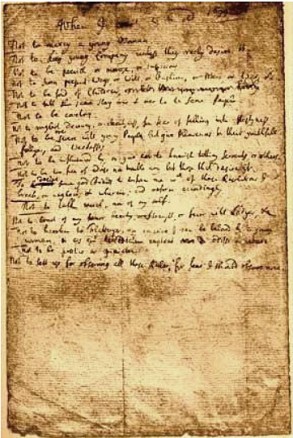
When I come to be old. 1699.
Not to marry a young Woman.
Not to keep young Company unless they reely desire it.
Not to be peevish or morose, or suspicious.
Not to scorn present Ways, or Wits, or Fashions, or Men, or War, &c.
Not to be fond of Children, or let them come near me hardly.
Not to tell the same story over and over to the same People.
Not to be covetous.
Not to neglect decency, or cleenlyness, for fear of falling into Nastyness.
Not to be over severe with young People, but give Allowances for their youthfull follyes and weaknesses.
Not to be influenced by, or give ear to knavish tatling servants, or others.
Not to be too free of advise, nor trouble any but those that desire it.
To desire some good Friends to inform me wch of these Resolutions I break, or neglect, and wherein; and reform accordingly.
Not to talk much, nor of my self.
Not to boast of my former beauty, or strength, or favor with Ladyes, &c.
Not to hearken to Flatteryes, nor conceive I can be beloved by a young woman, et eos qui hereditatem captant, odisse ac vitare.
Not to be positive or opiniative.
Not to sett up for observing all these Rules; for fear I should observe none.
SUSAN SONTAG
In 1972, 39-year-old Susan Sontag noted in her diary:
Kindness, kindness, kindness.
I want to make a New Year’s prayer, not a resolution. I’m praying for courage.
Then, in early 1977, she resolved:
Starting tomorrow — if not today:
I will get up every morning no later than eight. (Can break this rule once a week.)
I will have lunch only with Roger [Straus]. (‘No, I don’t go out for lunch.’ Can break this rule once every two weeks.)
I will write in the Notebook every day. (Model: Lichtenberg’s Waste Books.)
I will tell people not to call in the morning, or not answer the phone.
I will try to confine my reading to the evening. (I read too much — as an escape from writing.)
I will answer letters once a week. (Friday? — I have to go to the hospital anyway.)
MARILYN MONROE
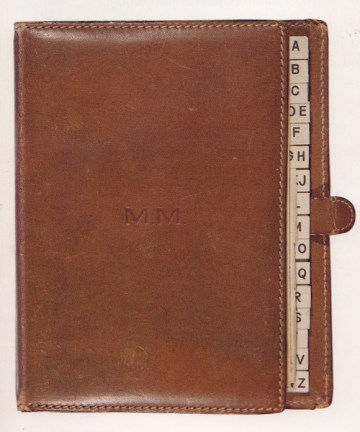
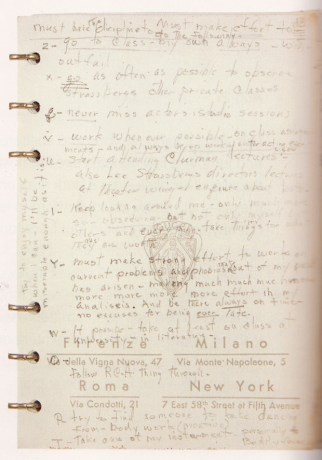
In the winter of 1955, a 29-year-old Marilyn Monroe resolved in her leather-bound address book to do things better. The list comes from Fragments, the fantastic tome that gave us Monroe’s moving unpublished poetry.
Must make effort to do
Must have the discipline to do the following –
z — go to class — my own always — without fail
x — go as often as possible to observe Strassberg’s other private classes
g — never miss actor’s studio sessions
v — work whenever possible — on class assignments — and always keep working on the acting exercises
u — start attending Clurman lectures — also Lee Strassberg’s directors lectures at theater wing — enquire about both
l — keep looking around me — only much more so —observing — but not only myself but others and everything — take things (it) for what they (it’s) are worth
y — must make strong effort to work on current problems and phobias that out of my past has arisen — making much much much more more more more more effort in my analisis. And be there always on time — no excuses for being ever late.
w — if possible — take at least one class at university — in literature –
o — follow RCA thing through.
p — try to find someone to take dancing from — body work (creative)
t — take care of my instrument — personally & bodily (exercise)
try to enjoy myself when I can — I’ll be miserable enough as it is.
WOODY GUTHRIE
In 1942, 30-year-old Woody Guthrie penned a 33-point compendium of “New Years Rulin’s.” The list, originally featured here in 2011, is equal parts brave and vulnerable, brimming with a kind of heart-warming earnestness we’ve come to be tragically cynical about.
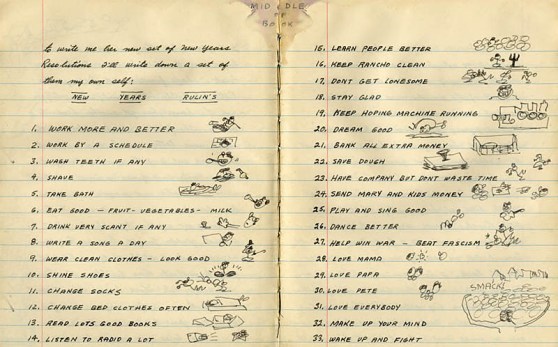
- Work more and better
- Work by a schedule
- Wash teeth if any
- Shave
- Take bath
- Eat good — fruit — vegetables — milk
- Drink very scant if any
- Write a song a day
- Wear clean clothes — look good
- Shine shoes
- Change socks
- Change bed cloths often
- Read lots good books
- Listen to radio a lot
- Learn people better
- Keep rancho clean
- Dont get lonesome
- Stay glad
- Keep hoping machine running
- Dream good
- Bank all extra money
- Save dough
- Have company but dont waste time
- Send Mary and kids money
- Play and sing good
- Dance better
- Help win war — beat fascism
- Love mama
- Love papa
- Love Pete
- Love everybody
- Make up your mind
- Wake up and fight
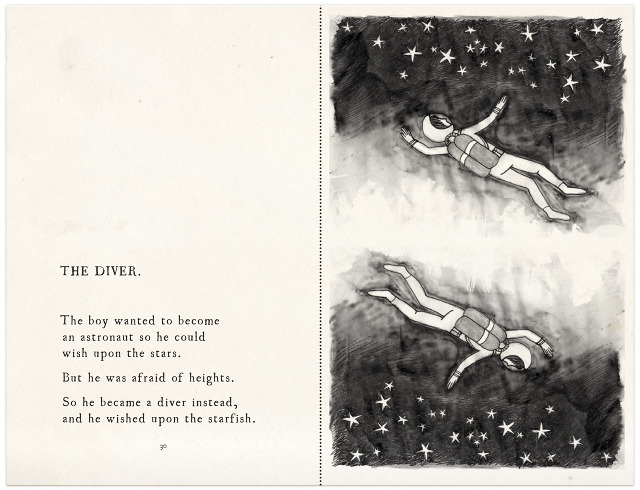
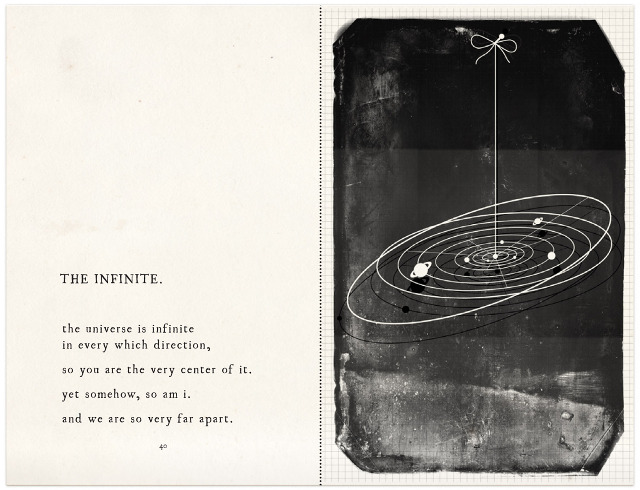
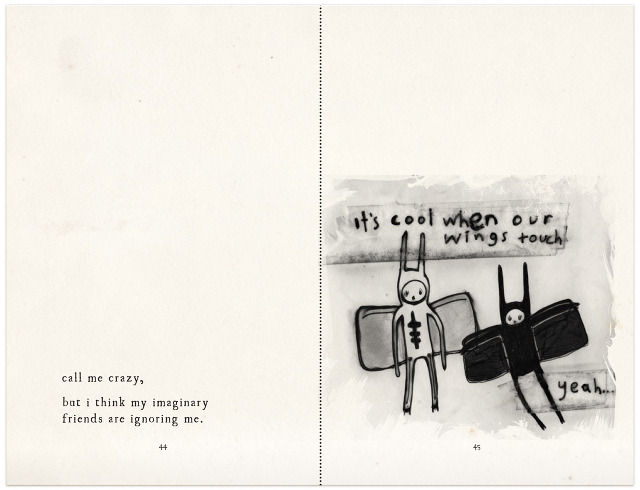
The Tiny Book of Tiny Stories


Last Lines – Dubliners
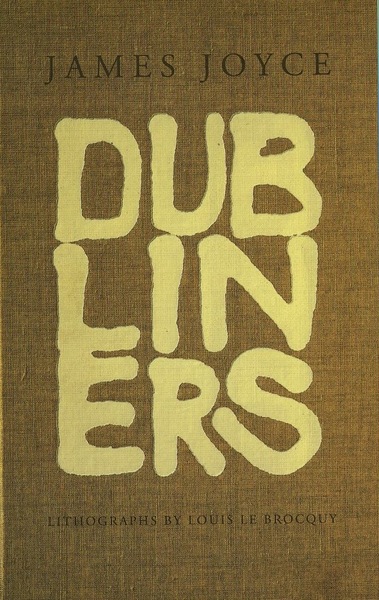
His soul swooned slowly as he heard the snow falling faintly through the universe and faintly falling, like the descent of their last end, upon all the living and the dead.
– The last line of The Dead in Dubliners by Joyce
Last Lines – The Unnameable

I’ll go on. You must say words, as long as there are any – until they find me, until they say me. (Strange pain, strange sin!) You must go on. Perhaps it’s done already. Perhaps they have said me already. Perhaps they have carried me to the threshold of my story, before the door that opens on my story. (That would surprise me, if it opens.)
It will be I? It will be the silence, where I am? I don’t know, I’ll never know: in the silence you don’t know.
You must go on.
I can’t go on.
I’ll go on.
– The last lines of Beckett’s, The Unnameable
Meditations in an Emergency
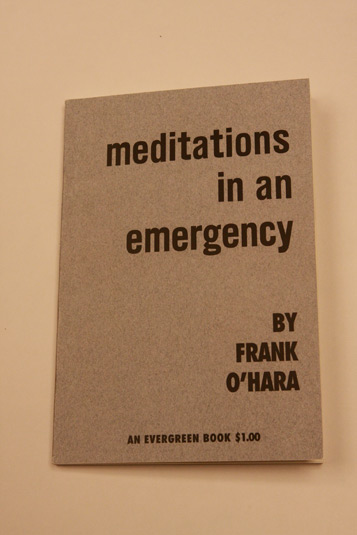 Am I to become profligate as if I were a blonde? Or religious as if I were French?
Each time my heart is broken it makes me feel more adventurous (and how the same names keep recurring on that interminable list!), but one of these days there’ll be nothing left with which to venture forth.
Why should I share you? Why don’t you get rid of someone else for a change?
I am the least difficult of men. All I want is boundless love.
Even trees understand me! Good heavens, I lie under them, too, don’t I? I’m just like a pile of leaves.
However, I have never clogged myself with the praises of pastoral life, nor with nostalgia for an innocent past of perverted acts in pastures. No. One need never leave the confines of New York to get all the greenery one wishes—I can’t even enjoy a blade of grass unless I know there’s a subway handy, or a record store or some other sign that people do not totally regret life. It is more important to affirm the least sincere; the clouds get enough attention as it is and even they continue to pass. Do they know what they’re missing? Uh huh.
My eyes are vague blue, like the sky, and change all the time; they are indiscriminate but fleeting, entirely specific and disloyal, so that no one trusts me. I am always looking away. Or again at something after it has given me up. It makes me restless and that makes me unhappy, but I cannot keep them still. If only I had grey, green, black, brown, yellow eyes; I would stay at home and do something. It’s not that I am curious. On the contrary, I am bored but it’s my duty to be attentive, I am needed by things as the sky must be above the earth. And lately, so great has theiranxiety become, I can spare myself little sleep.
Now there is only one man I love to kiss when he is unshaven. Heterosexuality! you are inexorably approaching. (How discourage her?)
St. Serapion, I wrap myself in the robes of your whiteness which is like midnight in Dostoevsky. How am I to become a legend, my dear? I’ve tried love, but that hides you in the bosom of another and I am always springing forth from it like the lotus—the ecstasy of always bursting forth! (but one must not be distracted by it!) or like a hyacinth, “to keep the filth of life away,” yes, there, even in the heart, where the filth is pumped in and courses and slanders and pollutes and determines. I will my will, though I may become famous for a mysterious vacancy in that department, that greenhouse.
Destroy yourself, if you don’t know!
It is easy to be beautiful; it is difficult to appear so. I admire you, beloved, for the trap you’ve set. It’s like a final chapter no one reads because the plot is over.
“Fanny Brown is run away—scampered off with a Cornet of Horse; I do love that little Minx, & hope She may be happy, tho’ She has vexed me by this Exploit a little too. —Poor silly Cecchina! or F:B: as we used to call her. —I wish She had a good Whipping and 10,000 pounds.” —Mrs. Thrale.
I’ve got to get out of here. I choose a piece of shawl and my dirtiest suntans. I’ll be back, I’ll re-emerge, defeated, from the valley; you don’t want me to go where you go, so I go where you don’t want me to. It’s only afternoon, there’s a lot ahead. There won’t be any mail downstairs. Turning, I spit in the lock and the knob turns.
– Frank O’Hara
It is Easy to Forget How Mysterious and Mighty Stories Are…
I’m aware that just posting quotes can seem rather trite but I stumbled across one today that seemed pertinent (seeing as my past few posts have been about books) because it concerns the power of stories. Not just the ones we read but the ones we tell ourselves and each other; the fabric of the tales we tell about our lives and our personal histories and how what we weave shapes not just our pasts but our future too. I thought it was thought-provoking and so here it is. It’s from Ben Okri’s book, Birds of Heaven:
“It is easy to forget how mysterious and mighty stories are. They do their work in silence, invisibly. They work with all the internal materials of the mind and self. They become part of you while changing you. Beware the stories you read or tell; subtly, at night, beneath the waters of consciousness, they are altering your world…”
 memoryhouse