The Meaning of Life

We are here to laugh at the odds and live our lives so well that Death will tremble to take us.

The quest to understand the meaning of life has haunted humanity since the dawn of existence. Modern history alone has given us a plethora of attempted answers, including ones from Steve Jobs, David Foster Wallace, Anais Nin, Ray Bradbury, and Jackson Pollock’s dad. In 1988, the editors of LIFE magazine posed this grand question head-on to 300 “wise men and women,” from celebrated authors, actors, and artists to global spiritual leaders to everyday farmers, barbers, and welfare mothers. In 1991, they collected the results, along with a selection of striking black-and-white photographs from the magazine’s archives that answered the question visually and abstractly, in The Meaning of Life: Reflections in Words and Pictures on Why We Are Here . Here is a selection of the answers.


Pulitzer Prize winner Annie Dillard:

We are here to witness the creation and abet it. We are here to notice each thing so each thing gets noticed. Together we notice not only each mountain shadow and each stone on the beach but, especially, we notice the beautiful faces and complex natures of each other. We are here to bring to consciousness the beauty and power that are around us and to praise the people who are here with us. We witness our generation and our times. We watch the weather. Otherwise, creation would be playing to an empty house.

According to the second law of thermodynamics, things fall apart. Structures disintegrate. Buckminster Fuller hinted at a reason we are here: By creating things, by thinking up new combinations, we counteract this flow of entropy. We make new structures, new wholeness, so the universe comes out even. A shepherd on a hilltop who looks at a mess of stars and thinks, ‘There’s a hunter, a plow, a fish,’ is making mental connections that have as much real force in the universe as the very fires in those stars themselves.


Legendary science writer Stephen Jay Gould:

The human species has inhabited this planet for only 250,000 years or so-roughly.0015 percent of the history of life, the last inch of the cosmic mile. The world fared perfectly well without us for all but the last moment of earthly time–and this fact makes our appearance look more like an accidental afterthought than the culmination of a prefigured plan.

Moreover, the pathways that have led to our evolution are quirky, improbable, unrepeatable and utterly unpredictable. Human evolution is not random; it makes sense and can be explained after the fact. But wind back life’s tape to the dawn of time and let it play again–and you will never get humans a second time.

We are here because one odd group of fishes had a peculiar fin anatomy that could transform into legs for terrestrial creatures; because the earth never froze entirely during an ice age; because a small and tenuous species, arising in Africa a quarter of a million years ago, has managed, so far, to survive by hook and by crook. We may yearn for a ‘higher’ answer — but none exists. This explanation, though superficially troubling, if not terrifying, is ultimately liberating and exhilarating. We cannot read the meaning of life passively in the facts of nature. We must construct these answers ourselves — from our own wisdom and ethical sense. There is no other way.


Bill Owens
Graduation dance


Frank Donofrio, a barber:
I have been asking myself why I’m here most of my life. If there’s a purpose I don’t care anymore. I’m seventy-four. I’m on my way out. Let the young people learn the hard way, like I did. No one ever told me anything.


Leonard Freed
Harlem summer day


Science fiction writer Arthur C. Clarke:

A wise man once said that all human activity is a form of play. And the highest form of play is the search for Truth, Beauty and Love. What more is needed? Should there be a ‘meaning’ as well, that will be a bonus?

If we waste time looking for life’s meaning, we may have no time to live — or to play.


Franco Zecchin
Sicily


Literary icon John Updike:

Ancient religion and modern science agree: we are here to give praise. Or, to slightly tip the expression, to pay attention. Without us, the physicists who have espoused the anthropic principle tell us, the universe would be unwitnessed, and in a real sense not there at all. It exists, incredibly, for us. This formulation (knowing what we know of the universe’s ghastly extent) is more incredible, to our sense of things, than the Old Testament hypothesis of a God willing to suffer, coddle, instruct, and even (in the Book of Job) to debate with men, in order to realize the meager benefit of worship, of praise for His Creation. What we beyond doubt do have is our instinctive intellectual curiosity about the universe from the quasars down to the quarks, our wonder at existence itself, and an occasional surge of sheer blind gratitude for being here.

Poet Charles Bukowski:
For those who believe in God, most of the big questions are answered. But for those of us who can’t readily accept the God formula, the big answers don’t remain stone-written. We adjust to new conditions and discoveries. We are pliable. Love need not be a command or faith a dictum. I am my own God.

We are here to unlearn the teachings of the church, state and our educational system.

We are here to drink beer.

We are here to kill war.

We are here to laugh at the odds and live our lives so well that Death will tremble to take us.

We are here to read these words from all these wise men and women who will tell us that we are here for different reasons and the same reason.

Avant-garde composer and philosopher John Cage:
No why. Just here.
 

To be understood

“When you recognize that pain — and response to pain — is a universal thing, it helps explain so many things about others, just as it explains so much about yourself. It teaches you forbearance. It teaches you a moderation in your responses to other people’s behavior. It teaches you a sort of understanding. It essentially tells you what everybody needs. You know what everybody needs? You want to put it in a single word?

Everybody needs to be understood.

And out of that comes every form of love.

If someone truly feels that you understand them, an awful lot of neurotic behavior just disappears — disappears on your part, disappears on their part. So if you’re talking about what motivates this world to continue existing as a community, you’ve got to talk about love… And my argument is it comes out of your biology because on some level we understand all of this. We put it into religious forms. It’s almost like an excuse to deny our biology. We put it into pithy, sententious aphorisms, but it’s really coming out of our deepest physiological nature.”

– Sherwin Nuland

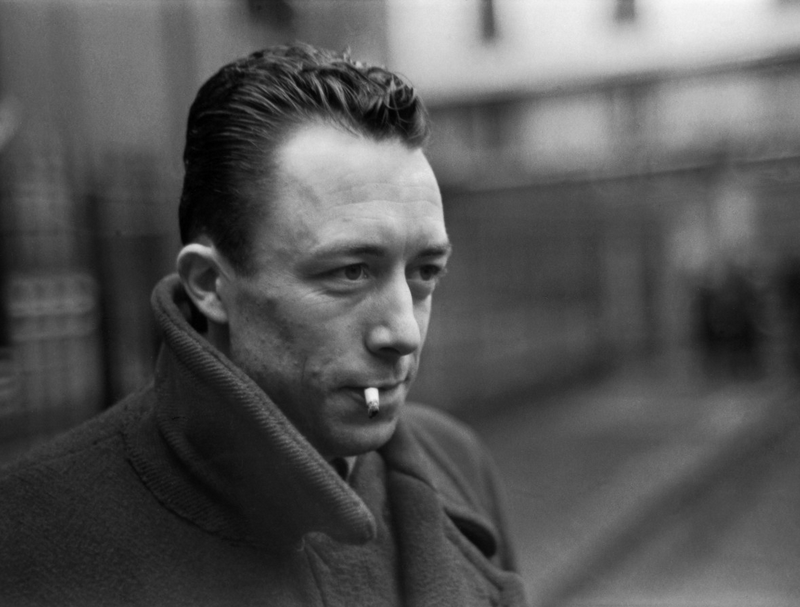
Happy Birthday, Albert Camus

tumblr_mvwfxh73OH1qzprlbo1_1280

Get scared. It will do you good. Smoke a bit, stare blankly at some ceilings, beat your head against some walls, refuse to see some people, paint and write. Get scared some more. Allow your little mind to do nothing but function. Stay inside, go out – I don’t care what you’ll do; but stay scared as hell. You will never be able to experience everything. So, please, do poetic justice to your soul and simply experience yourself.

Do You Want a Meaningful Life or a Happy One?

Happiness is not the same as a sense of meaning. What is this thing we call meaning, and why might we need it so badly?

“The difference between meaningfulness and happiness was the focus of an investigation I worked on with my fellow social psychologists… published in the Journal of Positive Psychology this August. … we found five sets of major differences between happiness and meaningfulness, five areas where different versions of the good life parted company.

The first had to do with getting what you want and need. Not surprisingly, satisfaction of desires was a reliable source of happiness. But it had nothing — maybe even less than nothing ­— to add to a sense of meaning. …

The second set of differences involved time frame. Meaning and happiness are apparently experienced quite differently in time. Happiness is about the present; meaning is about the future, or, more precisely, about linking past, present and future. The more time people spent thinking about the future or the past, the more meaningful, and less happy, their lives were. Time spent imagining the future was linked especially strongly to higher meaningfulness and lower happiness (as was worry, which I’ll come to later). Conversely, the more time people spent thinking about the here and now, the happier they were. …

This begins to suggest a theory for why it is we care so much about meaning. Perhaps the idea is to make happiness last. Happiness seems present-focused and fleeting, whereas meaning extends into the future and the past and looks fairly stable. For this reason, people might think that pursuing a meaningful life helps them to stay happy in the long run. They might even be right — though, in empirical fact, happiness is often fairly consistent over time. Those of us who are happy today are also likely to be happy months or even years from now, and those who are unhappy about something today commonly turn out to be unhappy about other things in the distant future. It feels as though happiness comes from outside, but the weight of evidence suggests that a big part of it comes from inside. …

If happiness is about getting what you want, it appears that meaningfulness is about doing things that express yourself. Even just caring about issues of personal identity and self-definition was associated with more meaning, though it was irrelevant, if not outright detrimental, to happiness. This might seem almost paradoxical: happiness is selfish, in the sense that it is about getting what you want and having other people do things that benefit you, and yet the self is more tied to meaning than happiness. Expressing yourself, defining yourself, building a good reputation and other self-oriented activities are more about meaning than happiness.”

Read more

George Saunders’ Advice to Graduates

“What I regret most in my life are failures of kindness. 

Those moments when another human being was there, in front of me, suffering, and I responded…sensibly.  Reservedly.  Mildly.

Or, to look at it from the other end of the telescope:  Who, in your life, do you remember most fondly, with the most undeniable feelings of warmth?

Those who were kindest to you, I bet.

It’s a little facile, maybe, and certainly hard to implement, but I’d say, as a goal in life, you could do worse than: Try to be kinder. …

Because kindness, it turns out, is hard – it starts out all rainbows and puppy dogs, and expands to include…well, everything.

One thing in our favor:  some of this “becoming kinder” happens naturally, with age.  It might be a simple matter of attrition:  as we get older, we come to see how useless it is to be selfish – how illogical, really.  We come to love other people and are thereby counter-instructed in our own centrality.  We get our butts kicked by real life, and people come to our defense, and help us, and we learn that we’re not separate, and don’t want to be.  We see people near and dear to us dropping away, and are gradually convinced that maybe we too will drop away (someday, a long time from now).  Most people, as they age, become less selfish and more loving.  I think this is true.  The great Syracuse poet, Hayden Carruth, said, in a poem written near the end of his life, that he was ‘mostly Love, now.’”

Read on.