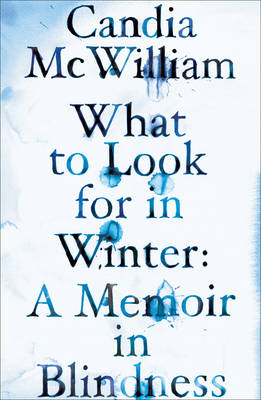
What to Look For in Winter: A Memoir in Blindness

This past weekend has definitely been all about books. So rock ‘n’ roll I know. Following on from my post about The Road I was going to blog about the poet whose work I dashed up to Foyles to buy but then I thought no, there’s actually another book I want to wax lyrical about first. Because it’s the one I’m currently engrossed in. And I think it might be one of the best I’ve read in the realm of story-telling for a long time. And it’s a true one.

The book is called, What to Look For in Winter: A Memoir in Blindness and is by Candia McWilliam. It’s an autobiography and usually I steer clear of autobiographies/biographies because I’ve always assumed that they must simply be a recall of one event after another with not much in the way of narrative to necessarily connect them. Plus I’ve never really been enough of a fan of anyone “real” as to  be fascinated enough to read about the minutiae of their life. But this may be a silly preconception because if there are biographical books out there anywhere near as good as this then I’ve been closing myself to an astonishingly rich vein of literature.

But to return to the book. Candia McWilliam is a Scottish author whose entire life had been subsumed by reading, as the book blurb says, her life “depended on reading and writing”. And so it was a particularly cruel twist of fate that, having only just joined the judging panel for the Booker Prize five years ago, she began to lose her sight. She suffered from  blepharospasm, a condition which means that the sufferer cannot open their eyes of their own volition. Her eyes were normal – she simply could not open them. It was her experience of this crippling and awful disorder that prompted her to create her memoir. Parts of it she wrote as her eyesight was failing her and some she dictated to a friend. Whether recorded by pen or dictation it is a remarkable memoir to read for even before her eyes closed she had had a raw and emotional life. This memoir is not just the story of how she coped with her darkening world but also her past struggles with alcoholism, her mother’s suicide and a past filled with sorrow, pain and love.

Her writing is wonderful. I know that some critics found it indigestible and apparently accused her of name-dropping throughout the book in such a manner as to be distracting and vain. Yes, there are a lot of names in the book, some well-known of course but it never feels like they are being dropped in your lap in an effort to impress. Rather that this was the circle she inhabited and so they make an appearance but they are often fleeting ones. And they don’t stick out or make you question why they are there. Well, at least I didn’t question why. This is very much her and her family’s story. And she tells it with such wit and passion and with such a brilliant way with words that I have found myself almost enthralled by the language alone. I love the words she uses – at the beginning of the book she speaks of how certain words burrow their way into her mind and that the newest to do so whilst she was dictating the book was: epilimnion. Epilimnion. What a beautiful word I thought. It means the upper, warmer layer of water in a lake. The part then that we swim in, that buoys us.

I cannot recommend this book highly enough – even though I’m only halfway through it myself. It is an incredibly raw story but also an enormously illuminating one in so many enriching ways. This is no ‘misery memoir’. It is someone’s search for a sense of self. And it is brilliant.

It begins:

“I am six foot tall and afraid of small people.

I am a Scot.

I am an alcoholic.

There is nothing wrong with my eyes.

I am blind.

I cannot lose my temper though I am being helped to…

I exude marriedness and I am alone.

This book is, among very many other things, an attempt to find that temper in order that I may lose it, and in losing it, perhaps, find my lost eyes…”
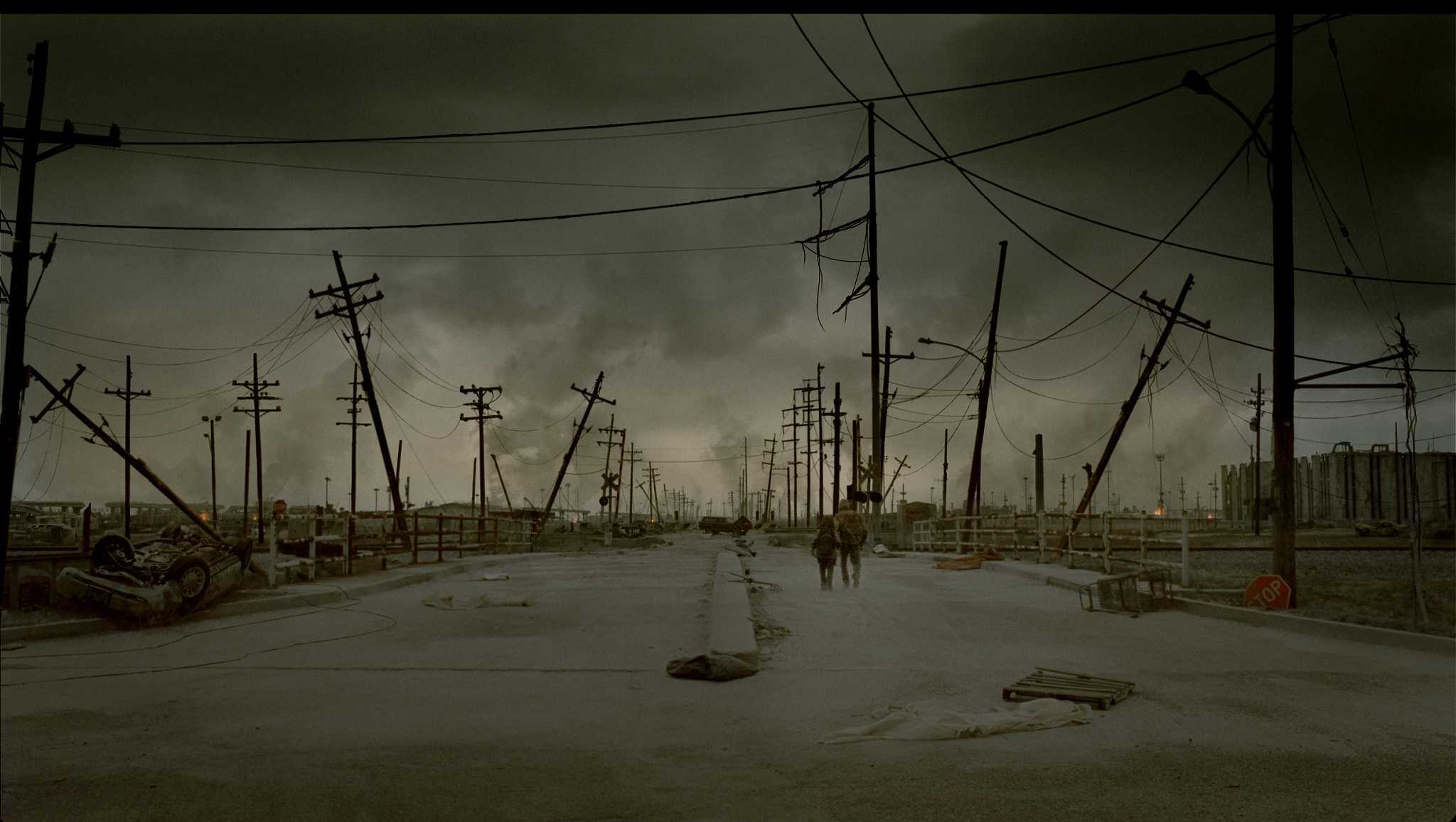
The Road – Cormac McCarthy

It’s been a “bookish” day today. I sped up to town when I found out that Foyles in London had some work in stock by a poet I’ve been wanting to read for some time. I want to blog about her later this weekend, once I’ve had a chance to actually read some of her work in depth. But browsing amongst the books today got me thinking about those that have really had an impact and whose words have stayed with me, echoing inside. There are, as you can imagine, quite a few. And yet I’ve been a little reticent to mention books on my blog. And I’m not sure why. So perhaps that’s something I should remedy.

One of the books that really slammed into me (metaphorically speaking) was The Road by Cormac McCarthy. It wasn’t simply the harrowing story of a post-apocalyptic world that stirred the emotions but the central relationship at the heart of the story – that between a father and son. I’m a sucker (as they say) for anything remotely connected to fathers and sons. And The Road is a particularly moving account of a deep and abiding love; one which is surprisingly tender despite the savagery of the bleak and desolate landscape in which the father and son journey across.

If you’ve only heard of or seen the film I urge you to try the book. As is often the case, watching the film isn’t a patch on reading the book. McCarthy’s prose is nearly radically minimalist – even the dialogue is almost desperately sparse:

“Just remember that the things you put into your head are there forever, he said. You might want to think about that.
You forget some things, don’t you?
Yes. You forget what you want to remember and you remember what you want to forget.”

Yet because of their brevity every sentence seems to count. It’s this minimalism and the intensity of the images that the author paints in your mind that are almost impossible to translate to a screen and much of the quiet, contained power of those swift sentences is lost in the translation.

Where that power, intensity and tenderness have translated well though has been into the incredible sore for the film. Composed by Nick Cave and Warren Ellis the music is really quite beautiful and is almost a perfect evocation of the soul-stirring words contained within the book. Below are two of the standout tracks. And as for the book? It may sound utterly depressing and it’s true that it’s no easy read in terms of tone but it’s very far from maudlin or morbid and for something to tug at the heart-strings it’s very hard to beat…

Play track: The Road

Play track: The Beach

Is the Internet Killing Culture?

A new book has been published recently called, Free Ride: How Digital Parasites Are Destroying the Culture Business, and How the Culture Business Can Fight Back. It’s by Robert Levine who used to work for Billboard magazine, so he should know a bit about cultural content. And I am certain he does – but his book is flawed.

Bashing the internet
Internet bashing has become the latest fashion – it’s killing culture, changing the way our brains work by feeding us content in little bite-size chunks rather than in enormous and suitably weighty tomes, or it’s  constricting our horizons (rather than expanding them) thanks to our experiences on the net becoming more and more tailored to our individual likes and dislikes.

Books like Levine’s have provocative titles and make compelling, emotive arguments but they’re actually pretty conservative, as this brilliant review of the book by the Observer highlights. Now I’m not advocating piracy by any means (I am totally against it) but one of the things I love about the internet is the amazing discoveries you can make – especially when it comes to content. Levine is wrong – the internet isn’t stifling creativity at all. It’s providing a platform to millions of people to unleash their creativity in ways that only a few years ago would have been unimaginable.

The delivery of art and culture 
Forms of art and culture have grown and morphed and adapted over thousands of years – from paintings in caves to sunflowers to concertos to beds and tents and neon signs. But the way they have been delivered to audiences has completely ossified. Stagnated. Typically housed or played behind closed doors in galleries, opera houses, concert halls with all of the barriers to entry and potential inconveniences one could think of – expense, parking, transport, opening and closing hours, not to mention that what you are seeing is usually curated, directed and programmed by someone else. Essentially meaning that they have selected, organised and decided what is of value for you to see and how you do so. This can be a valuable thing of course – expertise in any field is to be admired and respected and can teach us a great deal. And there is nothing quite like the thrill of seeing a Van Gogh in the flesh (so to speak) or hearing a live concert surrounded by the buzz of a live audience or seeing the glint of an actor’s eye as they command a stage. But it is not the only way, it is not even the best way. It is simply – a way.

The deomcratisation of the arts
There are so many inherent barriers to entry in how the arts have traditionally been delivered to audiences that it is little wonder that art and culture can be seen as being for the privileged few. But the internet has completely changed all that. It has decimated and destroyed many of those barriers. It has completely democratised not only the tools of artistic creation (think of all the things you can do now with apps with even the most rudimentary skills) but more importantly it has also democratised the tools of distribution. That’s where the real power lies. And a LOT of people don’t like that. Personally – I love it.

Of course there are those who abuse and take and steal – it is a sad fact of human nature. We covet and prefer to take what we cannot afford to buy. Is this a malaise of the internet or a reflection of the shifting values of our society and culture. I think the latter. The internet is, simply, a platform. One for all sorts of people – both with good and questionable motives. But not everyone steals culture and content. Despite what the doom-mongers would have us believe. The fact is that, as Evgeny Morozov points out in his review of Levine’s book, a 2010 report found that:

“films that could be purchased and legally viewed online are pirated far less often [than those that are not]”

Get off the soapbox
So, where am I going with this argument? Well, originally I wanted to share a video and an album that I’d found today via a site called Bandcamp. And then I got on my soapbox.

So let me get down from that box for a moment…

Bandcamp
I like Bandcamp a lot. It’s a brilliant site on which bands and musicians share their music – you can listen to it for free (not just 90 seconds of each track but all of it).  However, if you want to take what you hear with you then some bands ask you to pay a set price for it, others allow you to set your own, some even let you have it for free – they only ask that you show your support by going to see their live gigs. It is a completely democratic and quite brilliant system. It allows people to find and stumble across music they otherwise might never have found. It creates new fans, new communities, new musicians and artists who, inspired by what they see and hear and discover, decide to make their own music. And it provides a platform for artists. I love it.

I don’t think sites like Bandcamp should replace record labels – that would be horrendous. Or that the internet should replace concert halls or theatres or galleries.You need curated content, you need exhibitions, and labels and editors and so on. But sometimes discovering things for yourself or coming together with others who share a similar passion (even in a virtual environment like this one) and sharing what you’ve found can be hugely satisfying and deeply rewarding. Why stifle that? Why fear it? Why posit that there is only one way:the traditional way where what we see and hear and experience is controlled by the few?

What art and culture is meant to do
Art and culture – however it is delivered – is meant to enhance our lives. To enrich our experience of the world and to make us look at our fellow human beings with generosity and curiosity.

The internet is a platform that surely only enhances our curiosity and understanding. The internet is a place of discovery, a place where I have found so much (music in particular) that I love that has enriched my life in many ways. And it has led me to buy a lot of that music – to put my money where my mouth is. I am sure it leads a lot of others to do the same…

Ah hell. Let’s watch a video. The aforementioned one that I originally wanted to share. It was made by a company called Onesize to accompany a song that they too had stumbled upon by a band called, The American Dollar. They weren’t asked to create the video or commissioned by the band. They just heard something they loved and were inspired by it. And then they put up what they created for free and said, “we loved this so much, we made this. And we want to share it with you – so here it is. Enjoy it”.

What could be better than that? And the result is really quite lovely. See for yourself…