I stumbled across a remarkable soundtrack yesterday by the Icelandic composer, Jóhann Jóhannsson. I came across it in the unlikeliest of ways. I was watching the trailer to Battle: Los Angeles (yes, yes I know) which looks utter tripe but the music was really compelling (as you can hear if you click on the link) and I just had to find out who composed it. It was Jóhannsson.
As I was heading in to London anyway I thought I’d drop in at HMV to see which of his CDs they had in stock. And this is what I came away with. It isn’t the music featured on the trailer but it’s an achingly beautiful album. And as it’s available on soundcloud I thought I’d embed it here.
It’s an outstanding mix of choral, orchestral and electronic elements creating a truly haunting, nakedly emotional work. Some of it is very dark. In fact the track, Escape is one of the darkest things I’ve heard in some time. It begins with a drone of strings, a cello drags itself from the mire and then the most extraordinary electro-acoustic moan bellows forth before a choir joins to pull the track back into the darkness. It is a vividly spectral listen.
If you’ve been a little stressed lately (as I have) then this hugely satisfying collection of tracks could be just what you need to hear. Set the lights low and turn the volume up – this is a truly moving and memorable piece of music…
The cello. One of my favourite instruments. It is said that it is the one which most resembles the human voice. Perhaps that accounts for how emotive and haunting it can be to listen to.
Zoë Keating is an incredible cellist. Classically trained from an early age she actually cut her teeth playing with a variety of rock bands but is now regarded as a one-woman orchestra thanks to her use of sampling technology. She samples her playing and solo performances to create multiple layers and textures of sound and the results are often quite stunning and sublime.
She takes, as she says, a “label-less” approach to releasing her music and does so via Bandcamp (the site I talked about in my previous post). Although you can buy her CDs from amazon and itunes as well. Below is a track from her first EP, One Cello x16 and her latest album, Into The Trees. They’re both fantastic.
If you love what you hear, I urge you to click on the links and buy a copy so that she can keep making beautiful music. I think she’s an amazing talent.
Bashing the internet
Internet bashing has become the latest fashion – it’s killing culture, changing the way our brains work by feeding us content in little bite-size chunks rather than in enormous and suitably weighty tomes, or it’s constricting our horizons (rather than expanding them) thanks to our experiences on the net becoming more and more tailored to our individual likes and dislikes.
Books like Levine’s have provocative titles and make compelling, emotive arguments but they’re actually pretty conservative, as this brilliant review of the book by the Observer highlights. Now I’m not advocating piracy by any means (I am totally against it) but one of the things I love about the internet is the amazing discoveries you can make – especially when it comes to content. Levine is wrong – the internet isn’t stifling creativity at all. It’s providing a platform to millions of people to unleash their creativity in ways that only a few years ago would have been unimaginable.
The delivery of art and culture
Forms of art and culture have grown and morphed and adapted over thousands of years – from paintings in caves to sunflowers to concertos to beds and tents and neon signs. But the way they have been delivered to audiences has completely ossified. Stagnated. Typically housed or played behind closed doors in galleries, opera houses, concert halls with all of the barriers to entry and potential inconveniences one could think of – expense, parking, transport, opening and closing hours, not to mention that what you are seeing is usually curated, directed and programmed by someone else. Essentially meaning that they have selected, organised and decided what is of value for you to see and how you do so. This can be a valuable thing of course – expertise in any field is to be admired and respected and can teach us a great deal. And there is nothing quite like the thrill of seeing a Van Gogh in the flesh (so to speak) or hearing a live concert surrounded by the buzz of a live audience or seeing the glint of an actor’s eye as they command a stage. But it is not the only way, it is not even the best way. It is simply – a way.
The deomcratisation of the arts
There are so many inherent barriers to entry in how the arts have traditionally been delivered to audiences that it is little wonder that art and culture can be seen as being for the privileged few. But the internet has completely changed all that. It has decimated and destroyed many of those barriers. It has completely democratised not only the tools of artistic creation (think of all the things you can do now with apps with even the most rudimentary skills) but more importantly it has also democratised the tools of distribution. That’s where the real power lies. And a LOT of people don’t like that. Personally – I love it.
Of course there are those who abuse and take and steal – it is a sad fact of human nature. We covet and prefer to take what we cannot afford to buy. Is this a malaise of the internet or a reflection of the shifting values of our society and culture. I think the latter. The internet is, simply, a platform. One for all sorts of people – both with good and questionable motives. But not everyone steals culture and content. Despite what the doom-mongers would have us believe. The fact is that, as Evgeny Morozov points out in his review of Levine’s book, a 2010 report found that:
“films that could be purchased and legally viewed online are pirated far less often [than those that are not]”
Get off the soapbox
So, where am I going with this argument? Well, originally I wanted to share a video and an album that I’d found today via a site called Bandcamp. And then I got on my soapbox.
So let me get down from that box for a moment…
Bandcamp
I like Bandcamp a lot. It’s a brilliant site on which bands and musicians share their music – you can listen to it for free (not just 90 seconds of each track but all of it). However, if you want to take what you hear with you then some bands ask you to pay a set price for it, others allow you to set your own, some even let you have it for free – they only ask that you show your support by going to see their live gigs. It is a completely democratic and quite brilliant system. It allows people to find and stumble across music they otherwise might never have found. It creates new fans, new communities, new musicians and artists who, inspired by what they see and hear and discover, decide to make their own music. And it provides a platform for artists. I love it.
I don’t think sites like Bandcamp should replace record labels – that would be horrendous. Or that the internet should replace concert halls or theatres or galleries.You need curated content, you need exhibitions, and labels and editors and so on. But sometimes discovering things for yourself or coming together with others who share a similar passion (even in a virtual environment like this one) and sharing what you’ve found can be hugely satisfying and deeply rewarding. Why stifle that? Why fear it? Why posit that there is only one way:the traditional way where what we see and hear and experience is controlled by the few?
What art and culture is meant to do
Art and culture – however it is delivered – is meant to enhance our lives. To enrich our experience of the world and to make us look at our fellow human beings with generosity and curiosity.
The internet is a platform that surely only enhances our curiosity and understanding. The internet is a place of discovery, a place where I have found so much (music in particular) that I love that has enriched my life in many ways. And it has led me to buy a lot of that music – to put my money where my mouth is. I am sure it leads a lot of others to do the same…
Ah hell. Let’s watch a video. The aforementioned one that I originally wanted to share. It was made by a company called Onesize to accompany a song that they too had stumbled upon by a band called, The American Dollar. They weren’t asked to create the video or commissioned by the band. They just heard something they loved and were inspired by it. And then they put up what they created for free and said, “we loved this so much, we made this. And we want to share it with you – so here it is. Enjoy it”.
What could be better than that? And the result is really quite lovely. See for yourself…
At last. Something new on the horizon from Sigur Rós. Last week the band released a teaser trailer (see below) for something called, INNI.
Today it was revealed that INNI is going to be, apparently, the definitive Sigur Rós live experience. Which is essentially a live performance film and a double album. Whilst it’s a shame that there’s no new material (the band have been on “indefinite hiatus” since 2008) any news of a release by the band is enough to perk my day up considerably.
A large proportion of the film is live footage from their concert at Alexandra Palace in 2008 and was shot by the director Vincent Morisset, who made the Arcade Fire documentary, Miroir Noir.
Here is the teaser trailer and some of the original footage shot by Morisset. It’s pretty damn good and I bet will be absolutely amazing on a big screen with surround sound washing over you. For further details on the forthcoming release just click: here. The film and album are out in November.
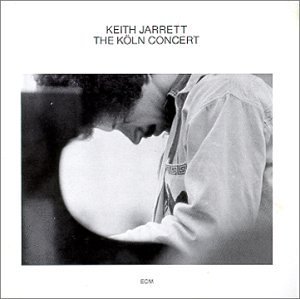
Classic jazz. The term makes me shiver. There are a few recordings that don’t – Kind of Blue and pretty much anything by Coltrane. But for me, the best of them all and one that deserves that you leave any preconceptions about jazz (nice) at the door is a live recording of a concert that the performer didn’t even want to play. And yet, when he did, something miraculous happened.
Keith Jarrett arrived in Cologne tired and exhausted and suffering from chronic back pain to play a solo piano concert at the city’s main opera house. When he arrived he found that the piano wasn’t the concert grand he expected but a substandard, ill-tuned baby grand meant only for rehearsals. There was no substitute. Initially he refused to play but 1,400 people were coming to see him perform only a few hours after his arrival. It was too late to cancel. So, at 11.30pm (an unusually late hour because the only time the house could give him was after that evening’s regular opera performance) he took to the stage. And, against all reasonable expectations, created a masterpiece.
His concert, broken down into four sections on the album and performed in two acts, was almost entirely improvised. Improvisational jazz can be a thing of squirm-inducing horror – self-indulgent noodling and interminable scales that go on for hour after mind-breaking hour. But not here. This was almost revolutionary improvisation at the time (1975) – quiet, lyrical spontaneity with breathtaking harmonic invention. His whoops and sighs which accompany his extraordinary playing only add to the sheer brilliance of the recording. It is an extraordinary record and one of the few concerts I dearly wish I could have experienced firsthand.
Here is Act I:
It is well worth seeking out your own copy to hear the concert in its entirety. Jazz will never seem quite the same again…
After I started this blog and called it the memory house, I did a google search of the name (as one does) just to see what else popped up. Of course many, many things did. But I had no idea that a masterpiece in necoclassical music was there to be found.
It’s a beautiful piece. And, whilst I thought of changing the name and have no pretensions to my blog having any kind of link with such a work, it’s such a poignant and evocative piece that I thought what better inspiration could there be…
Listening to Codes in the Clouds this week galvanized me to find similarly majestic and inspiring music. I needed to escape. And I found quite a few bands that are new to me and whose CDs are now winging their way to my living room. One I’m really keen to hear in particular is Explosions in the Sky. For more than a decade this four piece instrumental rock band have been creating music that, in their words,”immediately grabs your attention and gets to your emotions”. And the songs I’ve heard so far do exactly that.
Despite having played together for so long they’ve only just released their first video. It’s truly gorgeous. And here it is. Plug in the headphones and take a trip…
 I stumbled across a remarkable soundtrack yesterday by the Icelandic composer, Jóhann Jóhannsson. I came across it in the unlikeliest of ways. I was watching the trailer to Battle: Los Angeles (yes, yes I know) which looks utter tripe but the music was really compelling (as you can hear if you click on the link) and I just had to find out who composed it. It was Jóhannsson.
 A new book has been published recently called,
 memoryhouse