 I watched Bright Star for the first time last night. For those of you unfamiliar with the film – it’s an account of the love affair between the poet John Keats and Fanny Brawne. I was, I have to say, completely bewitched by it. Abbie Cornish gives an amazing performance as Fanny Brawne and Ben Whishaw as Keats is equally fine.
This is one of the few films I’ve seen that truly celebrates romantic love in its purest sense. When the poems and letters the two lovers shared are recited by both leads it is truly mesmerising. There are many sweet moments – a room filled with butterflies, the kissing of letters and even the moments between the words, which director Jane Campion has filled with near-silence, the rustle of autumnal leaves or simple birdsong. The effect is very beautiful.
But it’s with the words that the power lies. Whilst I was familiar with Keats’ poetry I was less so with his love letters and the words are so powerful, the letters so heartfelt that I thought I’d copy them here. They were written when the couple were unwillingly separated and Keats had to spend a summer on the Isle of Wight. Nobody seems to write letters any more. Certainly not love letters – at least not like these. I think they’re spellbinding…
A Selection of Letters to Fanny Brawne from John Keats
Postmark: Newport, July 3, 1819
Shanklin, Isle of Wight, Thursday
My dearest Lady — I am glad I had not an opportunity of sending off a Letter which I wrote for you on Tuesday night—’twas too much like one out of Rousseau’s Heloise. I am more reasonable this morning. The morning is the only proper time for me to write to a beautiful Girl whom I love so much: for at night, when the lonely day has closed, and the lonely, silent, unmusical Chamber is waiting to receive me as into a Sepulchre, then believe me my passion gets entirely the sway, then I would not have you see those Rhapsodies which I once thought it impossible I should ever give way to, and which I have often laughed at in another, for fear you should [think me] either too unhappy or perhaps a little mad.
I am now at a very pleasant Cottage window, looking onto a beautiful hilly country, with a glimpse of the sea; the morning is very fine. I do not know how elastic my spirit might be, what pleasure I might have in living here and breathing and wandering as free as a stag about this beautiful Coast if the remembrance of you did not weigh so upon me I have never known any unalloy’d Happiness for many days together: the death or sickness of some one has always spoilt my hours—and now when none such troubles oppress me, it is you must confess very hard that another sort of pain should haunt me.
Ask yourself my love whether you are not very cruel to have so entrammelled me, so destroyed my freedom. Will you confess this in the Letter you must write immediately, and do all you can to console me in it—make it rich as a draught of poppies to intoxicate me—write the softest words and kiss them that I may at least touch my lips where yours have been. For myself I know not how to express my devotion to so fair a form: I want a brighter word than bright, a fairer word than fair. I almost wish we were butterflies and liv’d but three summer days—three such days with you I could fill with more delight than fifty common years could ever contain. But however selfish I may feel, I am sure I could never act selfishly: as I told you a day or two before I left Hampstead, I will never return to London if my Fate does not turn up Pam or at least a Court-card. Though I could centre my Happiness in you, I cannot expect to engross your heart so entirely—indeed if I thought you felt as much for me as I do for you at this moment I do not think I could restrain myself from seeing you again tomorrow for the delight of one embrace.
But no—I must live upon hope and Chance. In case of the worst that can happen, I shall still love you—but what hatred shall I have for another!
Some lines I read the other day are continually ringing a peal in my ears:
To see those eyes I prize above mine own
Dart favors on another—
And those sweet lips (yielding immortal nectar)
Be gently press’d by any but myself—
Think, think Francesca, what a cursed thing
It were beyond expression!
J.
Do write immediately. There is no Post from this Place, so you must address Post Office, Newport, Isle of Wight. I know before night I shall curse myself for having sent you so cold a Letter; yet it is better to do it as much in my senses as possible. Be as kind as the distance will permit to your

Present my Compliments to your mother, my love to Margaret and best remembrances to your Brother—if you please so.
July 8, 1819
My sweet Girl—Your Letter gave me more delight than any thing in the world but yourself could do; indeed I am almost astonished that any absent one should have that luxurious power over my senses which I feel. Even when I am not thinking of you I receive your influence and a tenderer nature stealing upon me. All my thoughts, my unhappiest days and nights have I find not at all cured me of my love of Beauty, but made it so intense that I am miserable that you are not with me: or rather breathe in that dull sort of patience that cannot be called Life.
I never knew before, what such a love as you have made me feel, was; I did not believe in it; my Fancy was afraid of it, lest it should burn me up. But if you will fully love me, though there may be some fire, ’twill not be more than we can bear when moistened and bedewed with Pleasures.
You mention ‘horrid people’ and ask me whether it depend upon them whether I see you again. Do understand me, my love, in this. I have so much of you in my heart that I must turn Mentor when I see a chance of harm befalling you. I would never see any thing but Pleasure in your eyes, love on your lips, and Happiness in your steps. I would wish to see you among those amusements suitable to your inclinations and spirits; so that our loves might be a delight in the midst of Pleasures agreeable enough, rather than a resource from vexations and cares. But I doubt much, in case of the worst, whether I shall be philosopher enough to follow my own Lessons: if I saw my resolution give you a pain I could not.
Why may I not speak of your Beauty, since without that I could never have lov’d you? I cannot conceive any beginning of such love as I have for you but Beauty. There may be a sort of love for which, without the least sneer at it, I have the highest respect and can admire it in others: but it has not the richness, the bloom, the full form, the enchantment of love after my own heart. So let me speak of your Beauty, though to my own endangering; if you could be so cruel to me as to try elsewhere its Power.
You say you are afraid I shall think you do not love me—in saying this you make me ache the more to be near you. I am at the diligent use of my faculties here, I do not pass a day without sprawling some blank verse or tagging some rhymes; and here I must confess, that, (since I am on that subject,) I love you the more in that I believe you have liked me for my own sake and for nothing else. I have met with women whom I really think would like to be married to a Poem and to be given away by a Novel. I have seen your Comet, and only wish it was a sign that poor Rice would get well whose illness makes him rather a melancholy companion: and the more so as so to conquer his feelings and hide them from me, with a forc’d Pun.
I kiss’d your Writing over in the hope you had indulg’d me by leaving a trace of honey. What was your dream? Tell it me and I will tell you the interpretation threreof.
Ever yours, my love!
Do not accuse me of delay—we have not here any opportunity of sending letters every day. Write speedily.
July 15, 1819
Shanklin, Thursday Evening
My love—I have been in so irritable a state of health these two or three last days, that I did not think I should be able to write this week. Not that I was so ill, but so much so as only to be capable of an unhealthy teasing letter. To night I am greatly recovered only to feel the languor I have felt after you touched with ardency.
You say you perhaps might have made me better: you would then have made me worse: now you could quite effect a cure: What fee my sweet Physician would I not give you to do so.
Do not call it folly, when I tell you I took your letter last night to bed with me. In the morning I found your name on the sealing wax obliterated. I was startled at the bad omen till I recollected that it must have happened in my dreams, and they you know fall out by contraries. You must have found out by this time I am a little given to bode ill like the raven; it is my misfortune not my fault; it has proceeded from the general tenor of the circumstances of my life, and rendered every event suspicious. However I will no more trouble either you or myself with sad prophecies; though so far I am pleased at it as it has given me opportunity to love your disinterestedness towards me. I can be a raven no more; you and pleasure take possession of me at the same moment. I am afraid you have been unwell. If through me illness have touched you (but it must be with a very gentle hand) I must be selfish enough to feel a little glad at it. Will you forgive me this?
I have been reading lately an oriental tale of a very beautiful color. It is of a city of melancholy men, all made so by this circumstance. Through a series of adventures each one of them by turns reach some gardens of Paradise where they meet with a most enchanting Lady; and just as they are going to embrace her, she bids them shut their eyes they shut them and on opening their eyes again find themselves descending to the earth in a magic basket. The remembrance of this Lady and their delights lost beyond all recovery render them melancholy ever after. How I applied this to you, my dear; how I palpitated at it; how the certainty that you were in the same world with myself, and though as beautiful, not so talismanic as that Lady; how I could not bear you should be so you must believe because I swear it by yourself.
I cannot say when I shall get a volume ready. I have three or four stories half done, but as I cannot write for the mere sake of the press, I am obliged to let them progress or lie still as my fancy chooses. By Christmas perhaps they may appear, but I am not yet sure they ever will. ‘Twill be no matter, for Poems are as common as newspapers and I do not see why it is a greater crime in me than in another to let the verses of an half-fledged brain tumble into the reading-rooms and drawing-room windows. Rice has been better lately than usual: he is not suffering from any neglect of his parents who have for some years been able to appreciate him better than they did in his first youth, and are now devoted to his comfort.
Tomorrow I shall, if my health continues to improve during the night, take a look fa[r]ther About the country, and spy at the parties about here who come hunting after the picturesque like beagles. It is astonishing how they raven down scenery like children do sweetmeats. The wondrous Chine here as a very great Lion: I wish I had as many guineas as there have been spy-glasses in it.
I have been, I cannot tell why, in capital spirits this last hour. What reason? When I have to take my candle and retire to a lonely room, without the thought as I fall asleep, of seeing you tomorrow morning? or the next day, or the next—it takes on the appearance of impossibility and eternity—I will say a month—I will say I will see you in a month at most, though no one but yourself should see me; if it be but for an hour. I should not like to be so near you as London without being continually with you: after having once more kissed you Sweet I would rather be here alone at my task than in the bustle and hateful literary chitchat. Meantime you must write to me as I will every week for your letters keep me alive. My sweet Girl I cannot speak my love for you.
Good night! and
Ever yours
Postmark: July 27, 1819
Sunday Night
My sweet Girl—I hope you did not blame me much for not obeying your request of a Letter on Saturday: we have had four in our small room playing at cards night and morning leaving me no undisturb’d opportunity to write. Now Rice and Martin are gone I am at liberty. Brown to my sorrow confirms the account you give of your ill health. You cannot conceive how I ache to be with you: how I would die for one hour—for what is in the world? I say you cannot conceive; it is impossible you should look with such eyes upon me as I have upon you: it cannot be.
Forgive me if I wander a little this evening, for I have been all day employ’d in a very abstract Poem and I am in deep love with you two things which must excuse me. I have, believe me, not been an age in letting you take possession of me; the very first week I knew you I wrote myself your vassal; but burnt the Letter as the very next time I saw you I thought you manifested some dislike to me. If you should ever feel for Man at the first sight what I did for you, I am lost. Yet I should not quarrel with you, but hate myself if such a thing were to happen—only I should burst if the thing were not as fine as a Man as you are as a Woman.
Perhaps I am too vehement, then fancy me on my knees, especially when I mention a part of your Letter which hurt me; you say speaking of Mr. Severn ‘but you must be satisfied in knowing that I admired you much more than your friend.’ My dear love, I cannot believe there ever was or ever could be any thing to admire in me especially as far as sight goes—I cannot be admired, I am not a thing to be admired. You are, I love you; all I can bring you is a swooning admiration of your Beauty. I hold that place among Men which snub-nos’d brunettes with meeting eyebrows do among women—they are trash to me—unless I should find one among them with a fire in her heart like the one that burns in mine.
You absorb me in spite of myself—you alone: for I look not forward with any pleasure to what is called being settled in the world; I tremble at domestic cares—yet for you I would meet them, though if it would leave you the happier I would rather die than do so.
I have two luxuries to brood over in my walks, your Loveliness and the hour of my death. O that I could have possession of them both in the same minute. I hate the world: it batters too much the wings of my self-will, and would I could take a sweet poison from your lips to send me out of it. From no others would I take it. I am indeed astonish’d to find myself so careless of all charms but yours—remembering as I do the time when even a bit of ribband was a matter of interest with me.
What softer words can I find for you after this—what it is I will not read. Nor will I say more here, but in a Postscript answer any thing else you may have mentioned in your Letter in so many words—for I am distracted with a thousand thoughts. I will imagine you Venus tonight and pray, pray, pray to your star like a Heathen.
Your’s ever, fair Star,
My seal is mark’d like a family table cloth with my Mother’s initial F for Fanny: put between my Father’s initials. You will soon hear from me again. My respectful Compliments to your Mother. Tell Margaret I’ll send her a reef of best rocks and tell Sam I will give him my light bay hunter if he will tie the Bishop hand and foot and pack him in a hamper and send him down for me to bathe him for his health with a Necklace of good snubby stones about his Neck.
Letters from The Complete Poetical Works and Letters of John Keats, 1899
 I stumbled across a remarkable soundtrack yesterday by the Icelandic composer, Jóhann Jóhannsson. I came across it in the unlikeliest of ways. I was watching the trailer to Battle: Los Angeles (yes, yes I know) which looks utter tripe but the music was really compelling (as you can hear if you click on the link) and I just had to find out who composed it. It was Jóhannsson.
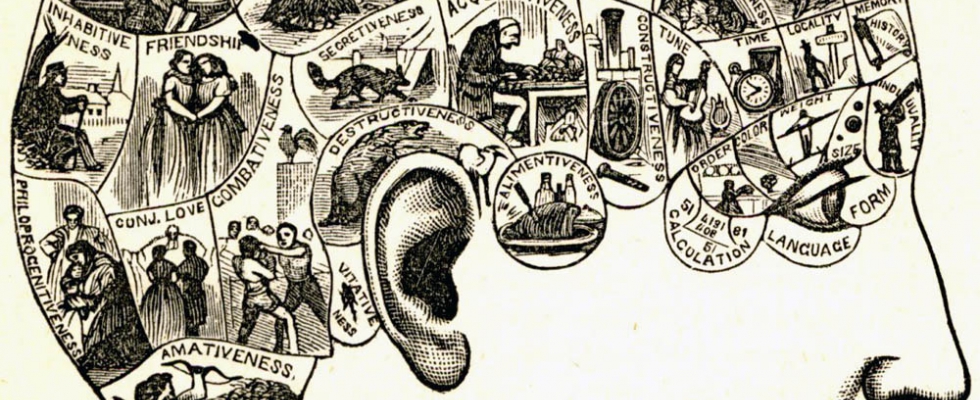
 A new book has been published recently called,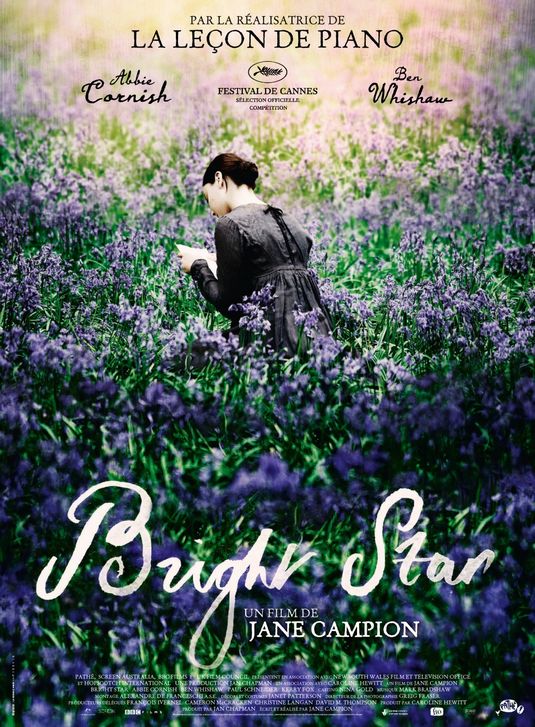
 memoryhouse